
A guide for architects working with vertical transportation (VT) consultants across all project phases – from traffic simulation and shaft coordination to final layout documentation and performance-based specs.

Introduction
Vertical transportation (VT) consultants play a specialized role on the design team, focusing on the planning and technical integration of elevators, escalators, accessible lifts, freight elevators, and even moving walkways. While most architects are familiar with the consultant’s presence on large projects, their full scope of services, and how best to work with them, isn’t always clearly understood.
The elevator consultant is typically responsible for determining the appropriate type, quantity, capacity, and speed of elevators based on anticipated building population and usage patterns. Their work involves performance analysis, traffic simulations, and code compliance, all of which inform decisions about elevator groupings, service separation, and control systems.
But while VT consultants drive system design, it’s the architect who typically leads decisions about where the elevator core goes. That placement is influenced not only by technical needs, but also by program adjacencies, structural constraints, circulation logic, and zoning strategy. These are areas where the elevator consultant may have limited visibility.
This post is written specifically for architects. It provides a clear overview of what vertical transportation consultants do, how they contribute at each project phase, and what architects should expect, ask for, and coordinate in return. Whether you’re working on an office tower, hospital, university, or residential high-rise, this guide is intended as both a reference checklist and a collaboration playbook. It will help you get the most out of your elevator consultant and avoid coordination missteps later in the design process.
Design Criteria: Key Performance Metrics for Elevator Planning
Early in the Concept and Schematic Design phases, the most critical task in vertical transportation planning is determining: a) how many elevators are needed, b) how fast they should operate, and c) how they should be grouped. These decisions rely on measurable performance targets that help consultants evaluate system efficiency and passenger experience during peak traffic.
While many variables influence elevator design – population, building type, travel distance, and floor configuration – these three (3) primary performance metrics guide the system analysis:
1. Interval
- Definition: The interval is the average time between elevator departures from the main terminal floor (usually the lobby) during the building’s busiest (peak) traffic period.
- Why It Matters: Shorter intervals reduce passenger wait times and improve perceived service. If the interval is too long, it may indicate an under-sized system or a mismatch between capacity and building demand.
- Target Ranges:
- Office Buildings: 25-35 seconds
- Hospitals: 30-50 seconds
- Residential / Hotel: 45-70 seconds
- Education: 25-40 seconds
2. Five-Minute Handling Capacity
- Definition: The percentage of the total building population that a group of elevators can move during a five-minute peak period.
- Benchmark: At least 12% of the population should be handled in five minutes during peak two-way traffic.
- Why It Matters: Handling capacity reflects how well the system accommodates the full demand profile of a building – not just average conditions but worst-case loads (e.g., shift changes, class dismissals, or visiting hours).
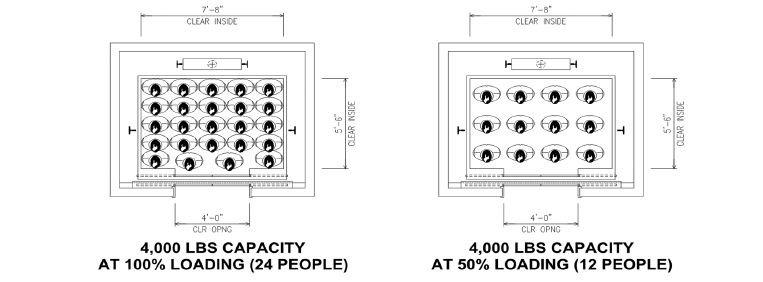
3. Loading Factor
- Definition: How full the elevator is expected to be during a typical peak trip, relative to its rated capacity.
- Design Practice:
- Code Maximum: 100%
- Realistic Design: 80%
- Comfortable Planning: ~60%
- In Healthcare: Often lower ~50% due to infection control, wheelchairs, and stretchers.
Additional Metrics
- Average Waiting Time: Typically 60–70% of the interval.
- Travel Time: Can vary with building height and may necessitate express elevators or zoning.
- Service vs. Passenger Elevators: Commonly separated in healthcare and mixed-use projects.
What Architects Should Provide During Early Phases
- Anticipated population by floor (staff, visitors, patients, etc.)
- Timing and intensity of peak periods
- Core locations and available shaft space
- Program-specific needs (e.g., stretcher access, AGVs, back-of-house separation)
- Floor-to-floor heights and ceiling constraints

1. Concept + Schematic Design: Establishing the Vertical Transportation Strategy
In the early design phases, the vertical transportation consultant works closely with the architect to define the elevator strategy. This includes setting performance criteria, determining the number and type of elevators, verifying code compliance, and evaluating how the system aligns with the building program and operational needs.
Traffic analysis at this stage often includes simulation-based modeling based on preliminary floor plans and sections, with inputs such as projected building population, peak demand periods, and anticipated circulation patterns. In healthcare and institutional projects, this analysis may also incorporate input from material management teams and consider the movement of supplies, equipment, and automated guided vehicles (AGVs). Where AGVs are planned, the analysis may evaluate whether they can share service elevators or require dedicated cars.
Consultants typically assess both conventional and destination dispatch systems. While destination control has become common in commercial and residential towers due to improved efficiency and user experience, its application in healthcare remains limited and less familiar. That said, early evaluation of destination dispatch can uncover potential operational benefits, particularly in high-traffic, multi-zone facilities.
Traffic studies generally result in recommendations for elevator capacity, quantity, speed, and zoning strategy, such as whether to divide the system into low-rise and high-rise banks. Most performance modeling is guided by established industry benchmarks and best practices, including standards drawn from the Vertical Transportation Handbook by George R. Strakosch.
This early-phase work also addresses spatial requirements for elevator shafts, machine rooms (if applicable), and clearances, helping the design team validate core layouts, structural planning, and mechanical coordination before geometry is locked in.
What the Vertical Transportation Consultant Does During Concept & SD:
- Establish Design Criteria
Define the core goals that will guide system planning – balancing performance, safety, code compliance, and client expectations. This includes identifying applicable codes and standards, and establishing key benchmarks such as interval, five-minute handling capacity, and loading factors. These criteria form the foundation for all traffic analysis, system sizing, and layout decisions that follow. - Review the Building Program
Analyze the preliminary program to understand building type, functional use, occupant load, and circulation demand. Identify key service needs such as material movement, patient transport, and back-of-house workflows. Evaluate how security protocols – such as floor lockouts, staff-only zones, or visitor restrictions – may impact elevator zoning, control systems, and traffic flow. - Confirm Programming Inputs and Assumptions
Confirm that floor-by-floor population estimates and peak demand scenarios provided by the design team are clearly documented and formatted for use in traffic modeling. These inputs directly shape simulation results and system sizing. Ensure assumptions reflect current program layouts, anticipated occupant types, and operational patterns. - Conduct Preliminary Traffic Studies
Use traffic analysis tools – ranging from spreadsheet-based models to more advanced simulations, to test elevator configurations and predict system performance. Evaluate quantity, speed, capacity, round-trip times, and grouping strategies. Output typically includes zoning recommendations and performance projections based on assumed peak demand and circulation patterns. - Evaluate Architectural Plans
Review architectural plans to confirm that elevator cores and lobbies are logically grouped, appropriately sized, and consistent with traffic modeling assumptions. Ensure that elevator placement aligns with departmental zoning, program circulation, and overall building function. Flag any discrepancies that may affect system performance, wait times, or long-term serviceability. - Participate in Design Meetings
Attend early design meetings to stay current with evolving planning decisions and respond to changes that may impact vertical transportation. Provide input as needed to ensure elevator strategy remains aligned with program development, core configuration, and early layout shifts. - Prepare a Preliminary Narrative
Summarize the traffic modeling results and recommended system configurations, including a clear justification for elevator quantity, grouping, and zoning. Explain the rationale behind passenger, service, and freight elevator strategies, referencing anticipated loading conditions, round-trip performance, and peak demand scenarios. The narrative is typically accompanied by supporting diagrams, spreadsheets, and simulation outputs to help the design team and owner evaluate the proposed approach. - Provide Technical Parameters
Deliver baseline technical requirements that define the space needs of the elevator systems, including clear hoistway dimensions, cab sizes, door widths, pit depths, overhead clearances, and equipment space (MR or MRL). Outputs typically take the form of plan and section drawings that illustrate passenger, service, staff, and patient elevator configurations. These documents support early core layout and space planning efforts. Escalators and other vertical systems are included where applicable. - Technical Documentation – Schematic Design Deliverable
Provide a narrative-format outline specification for each elevator type, describing system classification, control strategy, performance criteria, and operational requirements. Issue project-specific plan and section drawings, including pit layouts and machine rooms, that define shaft dimensions, cab sizes, equipment zones, and clearance requirements. Include early technical inputs for structural loads, electrical service, and ventilation needs to support coordination in subsequent design phases.
While the VT consultant provides technical analysis and system recommendations, architects should approach this information with a critical eye. Elevator planning is not an exact science, traffic models are only as reliable as the assumptions behind them, and outputs can vary significantly depending on how the inputs are framed. Don’t take the results at face value. Architects must remain actively engaged, ask questions, and push for clarity to ensure that the proposed solution truly fits the building’s program, circulation patterns, and long-term needs.

2. Design Development: Refining the Strategy and Advancing Documentation
By the Design Development phase, the vertical transportation strategy shifts from broad planning concepts to more refined layouts and technical documentation. The consultant revisits earlier traffic assumptions, updates recommendations based on planning revisions, and begins developing project-specific drawings. While VT documentation rarely becomes highly detailed, DD drawings are typically well-organized and as complete as the consultant’s scope allows, often including updated plans, sections, and basic equipment room layouts. Specifications also advance in this phase, taking on a more structured outline format (commonly in three-part spec form) and incorporating sustainability measures such as regenerative drives or energy-efficient control systems. Unlike other trades, serious drawing-based coordination with VT is limited at this stage, but the consultant’s input remains essential in validating core layout, performance assumptions, and system feasibility. What the Vertical Transportation Consultant Does During DD:
- Refines Earlier Planning
Revisits traffic analysis to reflect updates in the building program, occupant loads, or operational strategy. Adjustments at this stage are typically driven by changes to departmental allocations, use types, or peak period assumptions, rather than major architectural or structural shifts, since the core layout is generally already established.
- Updates Drawings
Advances the VT drawing set to reflect more developed plan layouts, pit configurations, hoistway sections, and machine room arrangements. Drawings are typically organized by elevator type, with separate sheets for passenger, service, patient, staff, trauma, freight, kitchen, and dumbwaiter systems as applicable. Updates include:- Dimensioned plans showing car sizes, hoistway dimensions, pit depths, and overhead/overrun clearances
- Section drawings with buffers, platforms, and access ladders
- Project-specific scope notes and details such as sills, entrances, and rail supports

- Consultant Coordination
Refines technical inputs for structural, mechanical, and electrical consultants based on updated layouts. Tasks include:- Confirming pit loads, rail forces, and equipment weights for EMRs or MRLs
- Flagging special pit conditions such as hanging or walk-in pits for structural detailing
- Updating MEP requirements for emergency power, EMR cooling, and ventilation
- Coordinating FSAE provisions, life safety features, and fire department access
- Reviewing operational needs such as card access, security cameras, and monitored recall
- BIM Coordination
VT content should be modeled to the level of detail appropriate for DD and compatible with the project’s BIM execution plan and workflows. Elevator layouts, machine rooms, pits, and overhead clearances should be modeled by the VT consultant in collaboration with the architect’s team.
- Review for Code Compliance
Verifies that elevator layouts and features meet applicable codes and accessibility standards. Reviews include: - Car sizes, door widths, and shaft dimensions
- Control panel placement and required signage
- Compliance with ASME A17.1, IBC, ADA, and FSAE provisions
- Refines Preliminary Specs
Updates the performance-based specification outline for each elevator type, including hydraulic, traction, and machine room-less (MRL) systems. Specs define: - Capacity, speed, door type, and accessibility requirements
- Operational features such as destination dispatch, executive service, Sabbath mode, and Code Blue
- Interior cab finish allowances, to be confirmed by the architect
What Architects Should Do During DD
- Review Cab and Shaft Dimensions
- Confirm interior cab clear dimensions and ceiling heights
- Verify cab shell accommodates finish flooring, ceilings, and wall materials
- Align VT dimensions with architectural cab and entrance drawings
- Coordinate Building Systems
- Confirm ceiling hatch location and size align with lighting or access panels
- Coordinate hoistway steel—rail supports, divider beams—with structural
- Verify power, cooling, and access needs with MEP engineers
- Ensure light levels meet ASME A17.1 requirements
- Design and Specification Review
- Design cab finishes, lighting, and lobby aesthetics; confirm finish weight with VT consultant
- Confirm material attachment with VT Consultant. Verify Flame Spread & Smoke Development meet code.
- Review VT specifications in detail for performance, control features, and coordination scope
VT consultants typically provide layouts in CAD, but architects should establish a new expectation that all vertical transportation documentation be modeled in Revit. This supports integrated workflows and improves coordination. The consultant should take full ownership of modeling elevator cabs, equipment zones, buffers, platforms, and machine rooms. Traditionally, project-specific drawings were left to the architect, but shifting this task to the consultant better aligns with current project demands. Architects remain responsible for the design and documentation of elevator cab interiors, entrances, and lobbies, including materials, lighting, and aesthetics.

3. Construction Documents: Finalizing the System and Deliverables
At the CD phase, elevator planning is formally documented in the technical construction set. The VT consultant finalizes layouts and specifications, incorporating all value engineering decisions, owner feedback, peer review comments, and coordination input from other consultants. While the drawings may appear similar to those issued during DD, this phase confirms that all dimensional requirements, system selections, and performance criteria are locked in. VT documentation typically remains general and performance-based, focusing on space planning, clearances, and system intent rather than detailed technical assemblies.
What the Vertical Transportation Consultant Does During CDs:
- Finalizes Layout Documentation
Updates all plan and section drawings to reflect finalized system configurations. Confirms hoistway dimensions, pit depths, overhead and overrun clearances, and machine room (EMR) layouts. Divider beams, shaft wall alignments, and access paths are verified. This level of documentation applies to all VT systems, including horizontal walkways, dumbwaiters, and specialized lifts for kitchens or laboratories.
- Develops Final Drawing Content
Issues complete sets of VT drawings, typically including: - Diagrammatic hoistway sections showing pit depths, buffers, platforms, ladders, and overhead clearances
- Cab sections indicating interior height, door height, and total hoistway dimensions
- Simplified EMR plans showing equipment locations, working clearances, and hoist/machine beams
- Plan views of hoistways, machine rooms, and pit layouts
- Pit and rail load matrix for structural coordination
- Project-specific scope notes and annotations related to access, cooling, and service provisions
- Completes Typical Details
Adds supplemental elevator-related details not previously included during DD. These may include: - Sump pit and drainage conditions
- Sill support details
- Annotated door elevations (if not already covered in architectural documents)
- Simplified machine diagrams noting structural support features
- Signage and compliance features for FSAE where required
- Confirms System Support Requirements
Reconfirms equipment weights, rail and hoist beam loads, electrical service needs, ventilation requirements, and any unusual structural or MEP conditions to support final consultant coordination.
- Prepares Final Specifications
Completes the Division 14 performance specification for each elevator system. Specs include: - Elevator type (traction, hydraulic, MRL) and service class (passenger, freight, hospital)
- Capacity, speed, door type, and control features
- Provisions for auxiliary systems (lab lifts, kitchen hoists, dumbwaiters)
- Tolerances for noise, vibration, and finish weight
- References to cab interior finish allowances or Division 9 content
- Structural integration requirements (rail loads, beams, machine supports)
- Incorporates VE, Owner Feedback, and Peer Review
Integrates all previously accepted value engineering revisions and formally documents responses to owner comments and peer review feedback.
What Architects Should Do During CDs:
- Review VT Drawings for Quality Control
Verify that all coordination items identified by the VT consultant have been addressed in the structural, mechanical, and electrical documents. Ensure that dimensional and clearance requirements are fully integrated. - Confirm Structural Coordination
Confirm that structural engineers have incorporated hoist beam locations, rail loads, and divider beams as shown in the VT drawings. - Finalize Cab Interior Design
Complete the design and documentation of elevator cab interiors, including finishes, lighting, and fixture placement. Ensure cab dimensions, ceiling heights, door widths, and control panel locations align with VT documentation. - Document Elevator Lobby Design
Finalize elevator lobby plans and elevations, including finishes, lighting, and fixture placement. Coordinate hall lanterns, call buttons, and destination dispatch interfaces with wall and finish layouts. Confirm that lobby clearances meet FSAE requirements where applicable. - Verify Shaft Enclosure Ratings
Reconfirm fire-resistance ratings for partitions enclosing elevator hoistways, including any penetrations or shaft wall conditions. - Confirm Code Compliance
Verify that emergency communication systems, accessibility features, and life safety interfaces remain code-compliant and consistent with the VT consultant’s specifications.
Unlike architectural or structural systems, elevator components are generally not detailed to the same degree in CD drawings. That’s because manufacturers such as Otis, Schindler, KONE, TKE, or Fujitec take responsibility for technical detailing, permitting, and system signoff. The consultant’s role is to define performance parameters and coordinate system fit, not to produce fabrication-level documents. Architects should not expect fully detailed elevator assemblies in the same way they would from other trades.

4. Construction Administration Support
During the construction phase, the VT consultant reviews elevator-related RFIs and submittals to ensure compliance with the design intent and specifications. They help resolve field issues, flag any proposed changes that may affect cab interiors or lobby design, and coordinate with the design team as needed. Site visits may be conducted to review progress, verify system layout, and support punch list activities prior to turnover. What the VT Consultant Does During Construction Administration:
- Reviews Submittals
Evaluates elevator shop drawings, product data, and layout proposals to confirm alignment with the design intent and specification. Verifies that proposed equipment fits within planned hoistways and machine rooms. - Advises on VE Options
Reviews alternate equipment, layouts, or manufacturers submitted for value engineering, ensuring system performance and safety are maintained. - Responds to RFIs
Provides clarification on elevator scope, layout constraints, and equipment requirements as questions arise during construction. - Attends Coordination Meetings
Participates in construction or milestone meetings as needed to help resolve elevator-related issues in the field. - Conducts Final Review
Performs site visits or punch list inspections to confirm that installed systems meet design and code requirements prior to turnover.
What Architects Should Do During CA:
- Support Submittal Review
Participate in the review of elevator shop drawings, finish samples, and fixture selections to confirm alignment with the design intent. Ensure the VT consultant is included in all elevator-related reviews. - Confirm Cab and Lobby Design Execution
Verify that elevator cab interiors, entrance finishes, call stations, and lobby signage match the approved design. Attend mock-ups or factory reviews if needed to confirm aesthetics and detailing. - Respond to Design Clarifications
Remain available to address field questions related to finishes, clearances, and architectural integration. If minor adjustments are proposed during installation, confirm they maintain the original design intent. - Support Final Review
Coordinate with the VT consultant as they perform field observations and punch list reviews, ensuring architectural elements that affect elevator performance or access are properly documented and resolved.
5. Applicable Codes and Standards
While local codes may vary, most elevator systems are designed in accordance with the following national standards:
- ASME A17.1 / CSA B44 – Safety Code for Elevators and Escalators
The primary code governing elevator design, construction, and operation in the U.S. and Canada. Covers shaft enclosures, door operation, emergency systems, and machine room layout. - ASME A17.3 – Safety Code for Existing Elevators and Escalators
Provides retrofit and upgrade requirements for older systems, often adopted by AHJs for modernization projects. - International Building Code (IBC)
Establishes general requirements for elevator safety, accessibility, smokeproof enclosures, and Fire Service Access Elevators (FSAEs). References ASME A17.1 as the core safety standard. - ANSI A117.1 – Accessible and Usable Buildings and Facilities
Specifies accessibility requirements for elevator car size, door timing, control placement, audible/visual signals, and emergency communication systems. - NEC Article 620 – National Electrical Code
Sets electrical requirements for elevators, escalators, and moving walks, including wiring, feeders, disconnects, and lighting for machine spaces.
Final Thoughts
Architects play a central role in guiding vertical transportation design, whether it’s aligning the core with program needs or coordinating system integration across disciplines. By setting clear expectations, advocating for Revit-based documentation, and staying actively engaged from concept through construction, architects can ensure that VT systems support both code compliance and operational efficiency. A proactive approach not only improves design outcomes, it strengthens the architect’s leadership in delivering well-coordinated, high-performance buildings.
Be the ONE